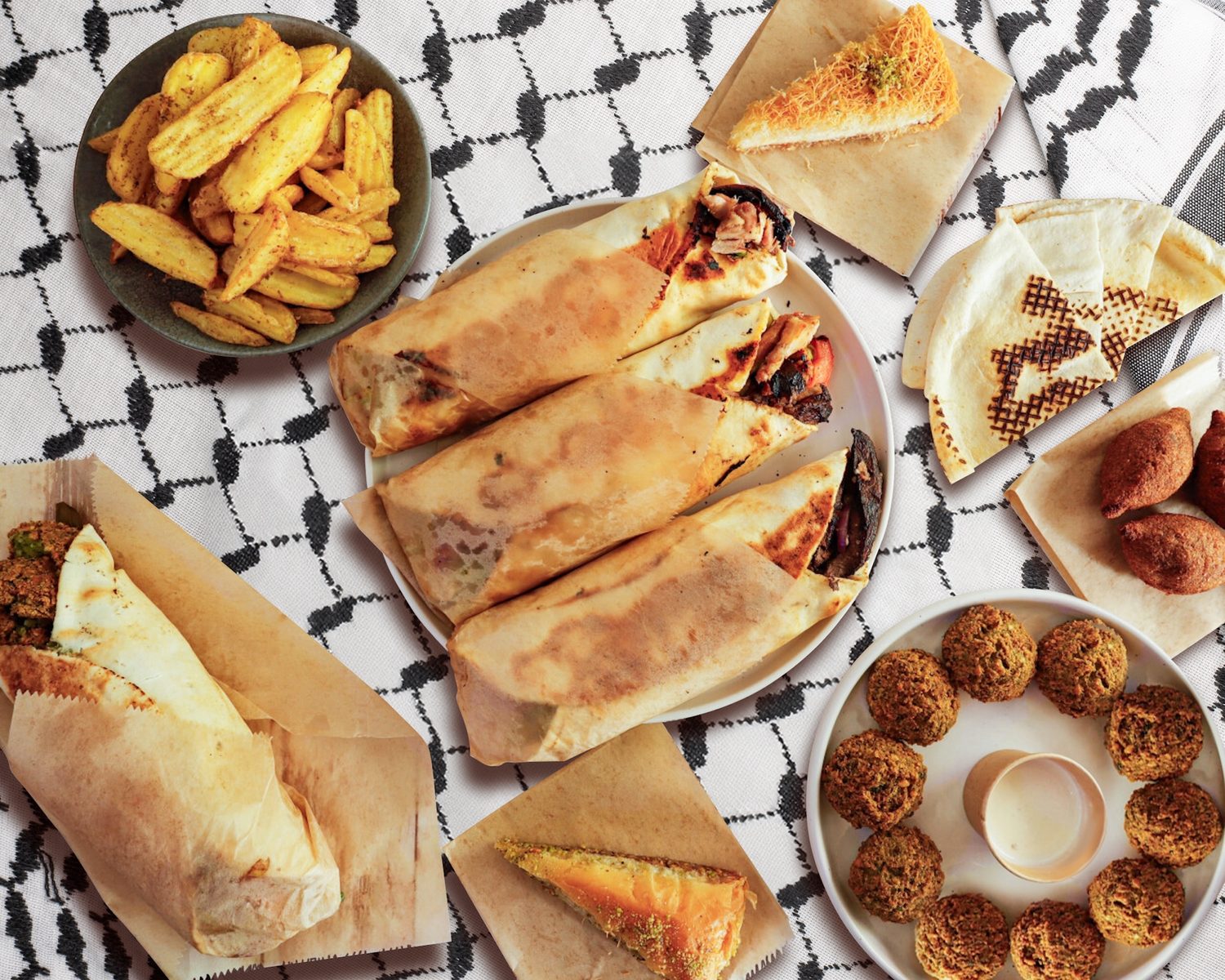
Palestinian cuisine is part of the broader Levantine culinary tradition, a region spanning Palestine, Lebanon, Syria, and Jordan that shares techniques and ingredients developed over centuries: slow roasting on a vertical spit, generous use of spices like cumin and za'atar, and a strong culture of sharing food at the table.
Where shawarma comes from
The technique of slow-roasting meat on a rotating vertical spit is documented in the 19th-century Ottoman Levant, and spread through the region with local variations from there. What's called "shawarma" in Palestine today takes its character from region-specific spices — a blend that typically includes cumin, cardamom, allspice, and a citrus touch — and from the custom of marinating the meat far longer than other regional variants.
Ingredients that define the Palestinian table
- Za'atar — a blend of thyme, sesame, and sumac, present in bread, potatoes, and many side dishes.
- Tahini — sesame paste, the base of the creamy sauces served with shawarma and falafel.
- Chickpeas — the base of falafel, soaked and freshly ground, not canned.
- Olive oil — good quality, used generously, not as an afterthought ingredient.
A living tradition, now in Valencia and Madrid
La Shawermeria was founded by a team of young Palestinians who wanted to bring that real tradition to Spain, without flattening it into a generic "Middle Eastern food" version. Every dish on our menu — shawarma, falafel, loaded fries, baklava — follows that same line: recipes with real roots, not a formula invented to fit a standard kebab-shop menu.
What is mezze, and why does it define the Palestinian table?
Mezze is not a starter course — it is the way of eating. The table is laid with many small dishes at once: hummus, salads, pickles, fresh bread, all shared rather than served in turn. That is why Palestinian cooking makes more sense as a whole than as a set of separate plates, since each element is built to sit alongside the others.
Shawarma belongs inside that logic. Traditionally it does not arrive as a single isolated plate, but with sauces, vegetables and bread, so that every mouthful combines several things at once.
How were ingredients preserved before refrigeration?
Much of the flavour of the Levant comes from solving a practical problem: keeping food in a hot climate without artificial cold. Olive oil covered and protected cheeses and vegetables; pickling extended the life of cucumbers, turnips and olives; and herbs were dried in the sun and ground into blends such as za'atar, which keep for months.
Those techniques still shape how Palestinian food tastes today. The sharpness of the pickles, the intensity of the dried spices and the generous use of olive oil are not decoration: they are a preservation method that turned into a tradition.
Taste a tradition centuries in the making, made fresh today.
Order now